
Patient awareness
Normal Fetal Heart Rate by Week: A Parent's Guide
One of the first questions parents ask during a pregnancy ultrasound. Here's what's typical, when it can first be seen, and when a reading is worth discussing with your doctor.
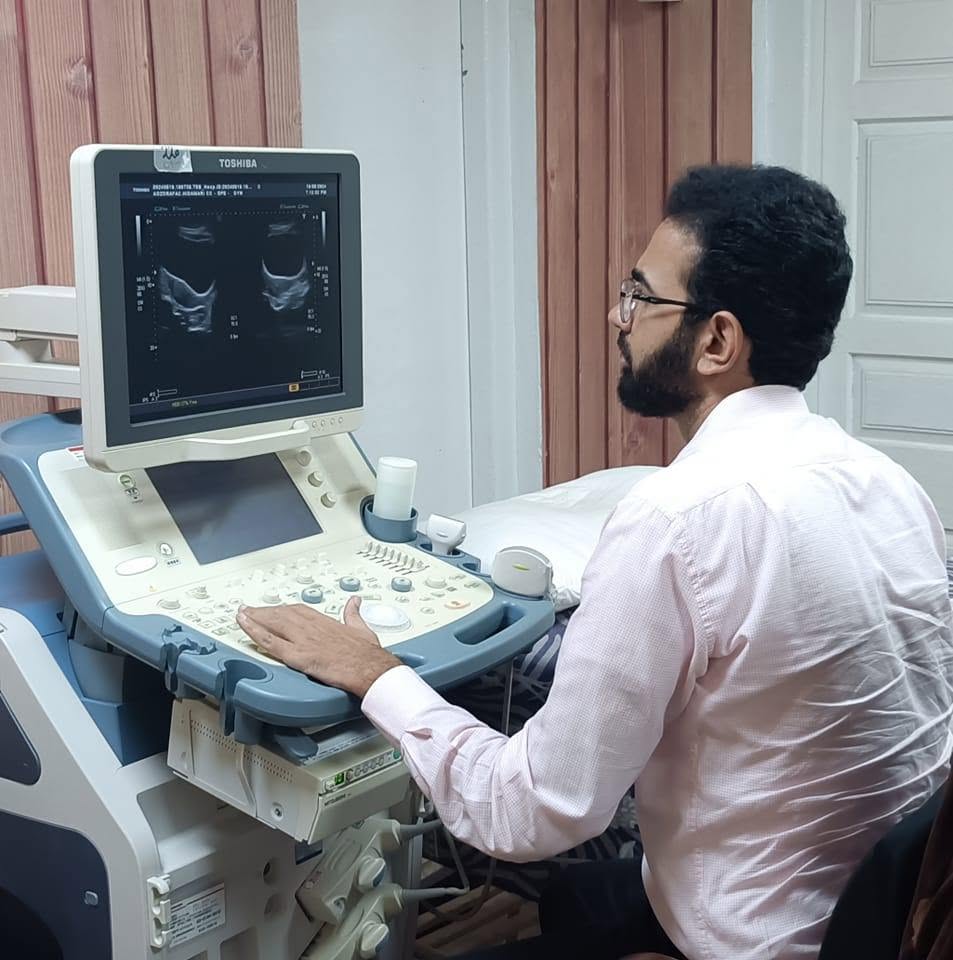 Reviewed by Dr. Saleem Mansha, PMDC-verified Consultant Radiologist · Updated 5 Sep 2026
When does the heartbeat first appear?
On a transvaginal or high-resolution ultrasound, cardiac activity is often visible from around 6 weeks of pregnancy, though it may not be clearly detectable until 7–8 weeks in some cases — this depends on the exact gestational age, the position of the uterus, and the equipment used. If a heartbeat isn't seen at exactly 6 weeks, it's often simply too early, and a repeat scan a week or two later is the normal next step.
Typical fetal heart rate ranges
| Stage | Typical range (bpm) |
|---|---|
| 6 weeks | ~100–120 |
| 9 weeks (peak) | ~140–170 |
| Second & third trimester | ~110–160 |
The heart rate is naturally fastest around 9 weeks and gradually settles into the 110–160 bpm range for the rest of the pregnancy. These are general population ranges, not a diagnostic cutoff for any individual pregnancy.
What affects the reading?
The baby's activity level at the exact moment of the scan, gestational age, and even a mother's own heart rate or anxiety can shift a single reading slightly. That's why your radiologist looks at the overall pattern and context — growth, movement, amniotic fluid — rather than one number in isolation.
Fetal heart rate is checked as part of every routine pregnancy ultrasound and Color Doppler scan at Mansha Diagnostic Centre. See Color Doppler Ultrasound or book directly at Okara / Renala Khurd.
Frequently Asked Questions
On ultrasound, a fetal heartbeat can typically be seen from around 6 weeks of pregnancy, though it may take until 7–8 weeks to be clearly visible in every case, depending on the exact stage and the equipment used.
In general, a fetal heart rate between roughly 110 and 160 beats per minute is considered within the typical range in the second and third trimester, though the exact expected range shifts slightly by gestational week.
A single reading outside the typical range isn't automatically a cause for concern — factors like the baby's activity level and the stage of pregnancy affect it. Always discuss any specific reading with your radiologist or obstetrician rather than comparing it to a general chart alone.