
Patient awareness
3D vs 4D vs 5D Ultrasound: What's the Difference?
Patients often ask which type of scan they're getting. Here's what each one actually shows — and why the difference matters more for bonding than for medical accuracy.
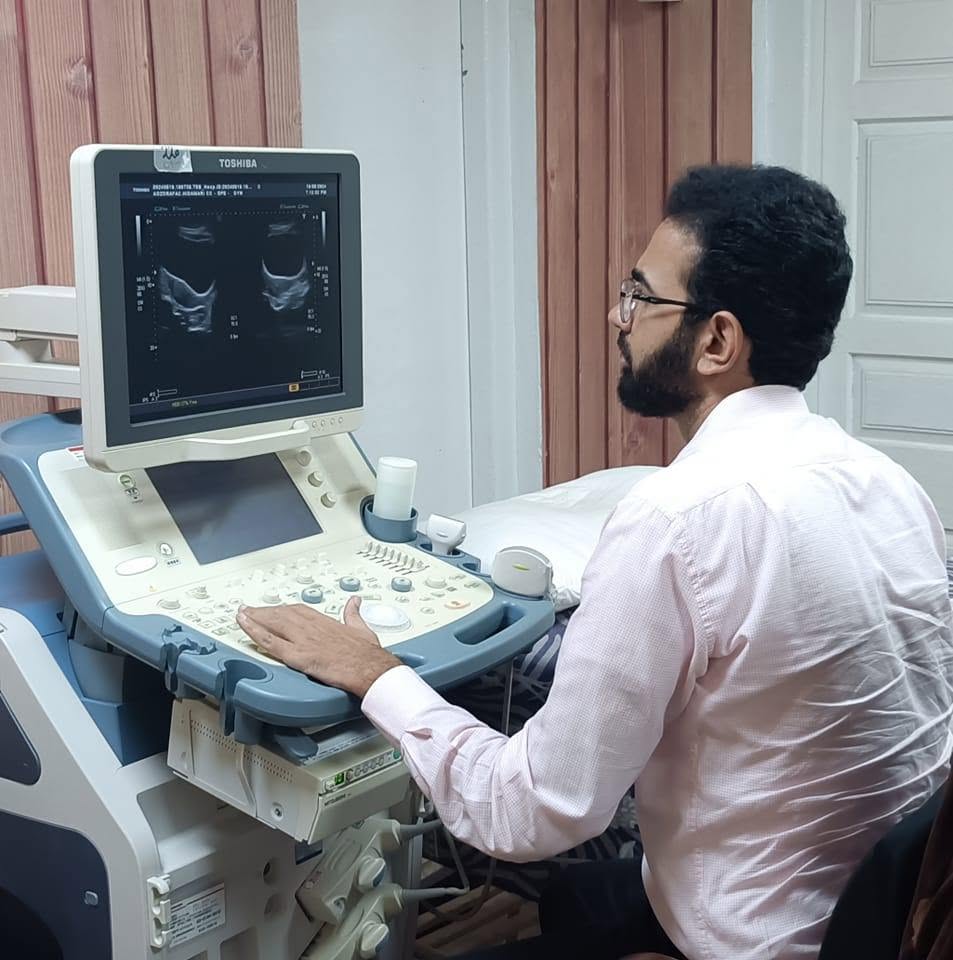 Reviewed by Dr. Saleem Mansha, PMDC-verified Consultant Radiologist · Updated 5 Sep 2026
The short answer
All three — 3D, 4D and 5D — use the exact same safe ultrasound technology as a standard 2D scan. The difference is purely in how the reflected sound waves are processed into an image, not in what's physically done to you or your baby.
| Type | What you see | Best for |
|---|---|---|
| 2D | Flat, black-and-white cross-section | Standard medical screening & measurements |
| 3D | A static, textured still image | A clearer single snapshot of the face or a structure |
| 4D | 3D image in real-time motion (like a video) | Watching your baby move, yawn or stretch live |
| 5D | 4D with enhanced lighting & skin rendering | The most lifelike, natural-looking view available |
Does the type of scan affect medical accuracy?
Not meaningfully. The anomaly scan — where organs, growth and structural development are checked — relies on 2D imaging and Color Doppler, the same foundation used across all these modes. 4D/5D is layered on top mainly for a clearer, more emotionally engaging view of the baby's face and movements; it doesn't replace the structural check your radiologist performs.
When is 4D/5D worth booking?
Most parents get the best facial images between 26 and 32 weeks, when there's enough amniotic fluid around the face and enough facial fat development, while the baby still has room to move into a good position. Earlier or later than this window, results can be less clear simply due to positioning and fluid levels — not a fault of the scan itself.
At Mansha Diagnostic Centre, 4D & 5D pregnancy ultrasound is available at both our Okara and Renala Khurd clinics, alongside the full anomaly scan. See Anomaly Scan & 4D/5D Ultrasound for pricing and booking.
Frequently Asked Questions
Yes. 4D and 5D ultrasound use the same safe sound-wave technology as standard 2D ultrasound — they simply process the reflected data differently to add motion or lifelike rendering. No ionising radiation is involved.
For medical screening (checking organs, growth and anomalies), a standard 2D or Color Doppler scan is usually sufficient and is what your anomaly scan is based on. 4D/5D adds a lifelike view mainly for bonding and keepsake purposes, on top of the same medical screening.
Most clinics recommend 26–32 weeks for the clearest 4D/5D facial images, since there's enough amniotic fluid and facial fat development, while the baby still has room to move.