
Patient awareness
X-Ray vs CT Scan vs MRI vs Ultrasound: Which Do You Need?
Your doctor referred you for a "scan" — but which one, and why? Here's a plain comparison of the four most common imaging tests.
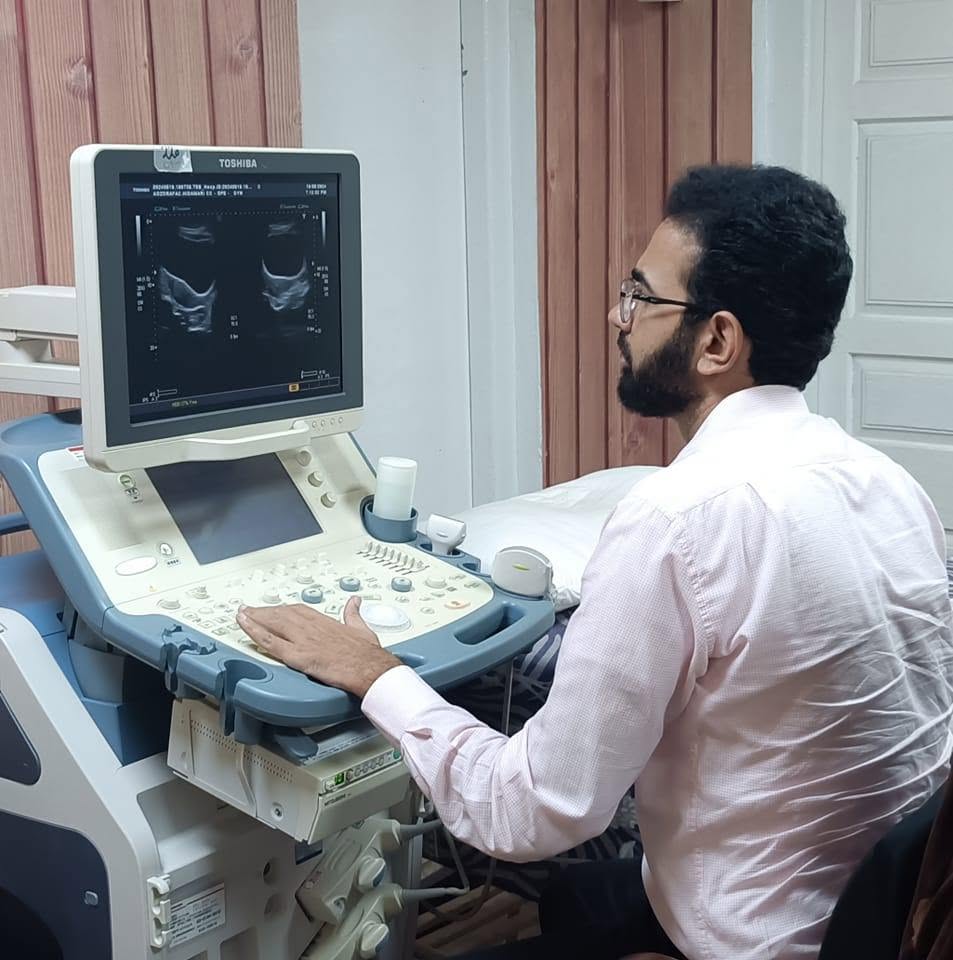 Reviewed by Dr. Saleem Mansha, PMDC-verified Consultant Radiologist · Updated 5 Sep 2026
| Test | How it works | Best for | Radiation? |
|---|---|---|---|
| X-Ray | A brief burst of radiation through the body onto a digital detector | Bones, fractures, chest, some GI studies (fluoroscopy) | Low dose |
| Ultrasound | High-frequency sound waves reflected back to build an image | Pregnancy, abdominal organs, blood flow (Doppler), soft tissue | None |
| CT Scan | Many X-ray images combined into cross-sectional/3D views | Complex trauma, detailed bone & organ detail, some cancers | Higher dose than X-ray |
| MRI | Magnetic fields & radio waves — no radiation | Brain, spinal cord, ligaments, detailed soft-tissue injuries | None |
Why did my doctor choose this specific test?
Each modality is suited to different tissue types. X-Ray and CT are best at showing dense structures like bone; ultrasound and MRI are better at showing soft tissue, fluid and blood flow. Cost, speed and local availability also factor in — X-Ray and ultrasound are faster and more widely available than CT or MRI, which is partly why they're the first step for most routine concerns.
What does Mansha Diagnostic Centre offer?
Our Okara and Renala Khurd clinics provide Digital X-Ray & fluoroscopy and the full range of ultrasound & Color Doppler studies, both reviewed by a PMDC-verified Consultant Radiologist. We don't perform CT or MRI on-site — if your case needs one, we can guide you on the next appropriate step.
Not sure which test your symptoms need? WhatsApp us at 0337-7122366 and we'll help point you in the right direction, or explore our Digital X-Ray and Color Doppler Ultrasound pages.
Frequently Asked Questions
Ultrasound is the imaging method of choice during pregnancy because it uses sound waves, not radiation. X-Ray and CT are generally avoided unless clinically necessary, in which case your doctor will weigh the benefit against the (usually low) risk.
Yes, typically. A CT scan takes many cross-sectional X-ray images to build a 3D picture, so its radiation dose is usually significantly higher than a single plain X-ray of the same body part.
Not always. Ultrasound is excellent for soft tissue, blood flow and moving structures like the heart or a fetus, but MRI gives more detail for the brain, spinal cord and certain joint or ligament injuries. Your doctor will recommend the modality suited to what's being investigated.